
Emergency Lighting Requirements for Commercial Premises
If the normal lighting failed on a dark winter afternoon, would everyone in the building have a clear, lit route to the nearest exit?
That is the practical question behind emergency lighting requirements. It is not just about having fittings in place. It is about whether people can move safely through the building if the main lighting fails.
For commercial premises, emergency lighting sits across fire safety, workplace safety and electrical compliance. That is why it can sometimes be overlooked. It may not sit neatly with one person or one maintenance task, but it still needs to remain suitable for how the building is used.
What counts as emergency lighting?
Emergency lighting is lighting that operates when the normal lighting supply fails. Its purpose is to help people find escape routes, identify exits, avoid hazards and leave the building safely.
It is different from general backup power. A generator that keeps equipment running is not the same as emergency lighting that supports safe movement through the premises.
In commercial buildings, emergency lighting should be considered alongside fire risk assessments, escape routes, signage, building layout and wider electrical maintenance.
Where emergency lighting may be required
Emergency lighting requirements depend on the building, how it is used and the level of risk if normal lighting fails.
In practical terms, emergency lighting is commonly considered for escape routes, stairways, corridors, final exits, windowless spaces, plant rooms, high-risk work areas and routes used outside daylight hours.
That does not mean every room automatically needs emergency lighting. A small single-storey unit with simple routes may need a different approach from a multi-floor office, warehouse, school, retail unit or industrial site used into the evening.
The key question is whether a lighting failure would put people at risk or make it harder for them to leave the building safely.
Where emergency lighting requirements can fall out of date
In many commercial premises, the issue is not that emergency lighting was never installed. It is that the building has changed since the system was last reviewed.
A layout may have been suitable when the system was first installed, but that can change over time. New partitions, racking, machinery, signage, tenants or working patterns can all affect escape routes and visibility.
Common issues include missing test records, damaged fittings, failed batteries, emergency lights blocked by stock or shelving, and previous defects that have not been followed up.
If the building has been refurbished, expanded or changed use, it is worth checking whether the emergency lighting still matches the current layout.
Testing, maintenance and records
Emergency lighting needs to work when it is needed, so testing and maintenance should form part of the wider building maintenance process.
This may include routine checks, inspection of fittings, review of test records, battery duration testing where required, replacement of faulty fittings and recording of remedial actions.
The records matter as much as the checks themselves. If there is an audit, insurance query or safety incident, clear records help show what has been tested, what issues were found and what action was taken.
If records are missing or inconsistent, it can be difficult for facilities teams, landlords or responsible persons to demonstrate that emergency lighting is being properly managed.
Emergency lighting and commercial lighting upgrades
If you are planning a commercial lighting installation or LED upgrade, it is sensible to review emergency lighting at the same time.
Lighting projects often involve access equipment, changes to fittings, work around corridors or exits, and disruption to parts of the building. Reviewing emergency lighting during the same project can be more practical than treating it as a separate job later.
It also helps ensure the finished lighting installation reflects the current layout of the premises, rather than an outdated version of it.
When to arrange an emergency lighting review
You should consider arranging a review if you are unsure whether your emergency lighting is suitable, if test records are missing, or if the building layout has changed.
A review may also be useful if fittings are damaged, escape routes have been altered, previous defects have not been completed, or a fire risk assessment has raised concerns.
For landlords, property managers and facilities teams, an emergency lighting review can help clarify what is working, what needs attention and whether the current setup is still appropriate for the premises.
FAQs
Do all commercial buildings need emergency lighting?
Many commercial premises require emergency lighting in some form, especially where people would be at risk if normal lighting failed. The extent depends on the layout, occupancy, escape routes and how the building is used.
Does every room need emergency lighting?
No. Emergency lighting requirements depend on the layout, use and risk level of the building. It is usually focused on areas where lighting failure could create danger or affect safe escape.
How often should emergency lighting be tested?
Emergency lighting should be tested regularly, with records kept for checks, defects and remedial work. The right testing schedule should be confirmed based on the system, premises and relevant fire safety arrangements.
Should emergency lighting be checked during a lighting upgrade?
Yes. A lighting upgrade is a good opportunity to check whether emergency lighting remains suitable for the current layout, escape routes and use of the premises.
Arrange an emergency lighting review
If you are not sure whether your emergency lighting still matches the way your building is used, Nene Electrical can help.
We can review the system against your current layout, identify obvious gaps or defects, and advise what needs attention.
📞 01327 300 456
📧 hello@nene-electrical.co.uk
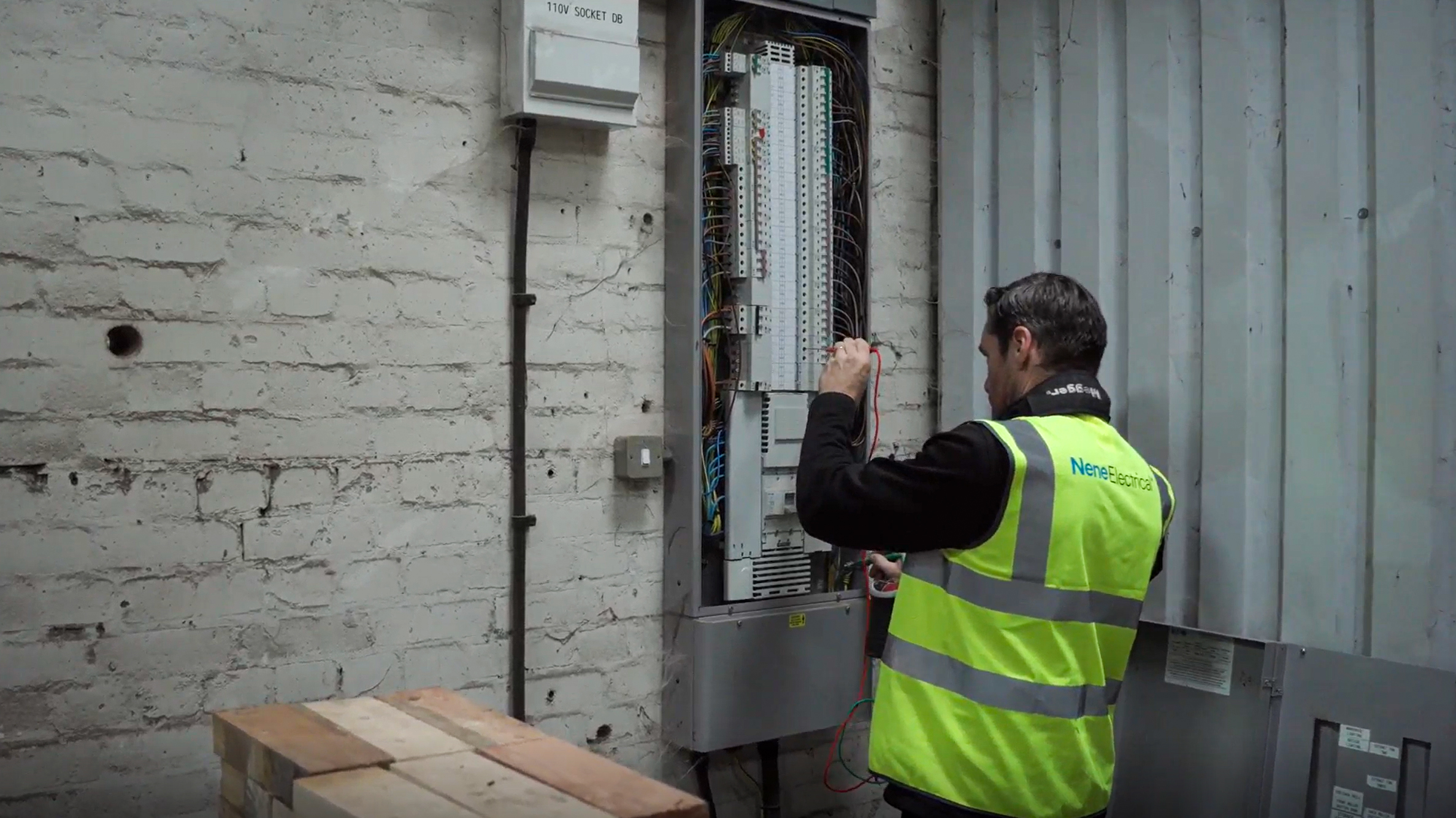
Planned v Reactive Electrical Maintenance: Which is Right for Your Business?
Most businesses manage electrical maintenance in one of two ways. They either fix problems as they happen, or they get ahead of them before they cause disruption.
There is nothing wrong with reactive repairs. Sometimes a fault appears without warning and a business needs urgent electrical support. But if that is the only approach your business takes, downtime, cost and risk can become much harder to predict.
Planned electrical maintenance gives commercial buildings a more structured way to keep systems under review, identify smaller issues earlier and reduce disruption that could otherwise have been avoided.
What is reactive electrical maintenance?
Reactive maintenance is work carried out once something has already gone wrong. This could include a tripping circuit, failed lighting, a damaged socket, an emergency lighting fault, a power issue or signs of overheating.
It has an important role. Even a building with a good maintenance history can still develop unexpected faults, so having a contractor who can respond quickly matters.
Where reactive maintenance falls short is timing. By the time someone is called out, the fault may already be affecting staff, customers, tenants, access, production or trading hours. The repair may solve the immediate issue, but it does not always give you a clear view of the wider condition of the electrical installation.
What is planned electrical maintenance?
Planned maintenance changes the order of events. Instead of waiting for something to break, time is scheduled to review electrical systems, check recurring concerns and deal with remedial work before it becomes urgent.
That might include visual checks, lighting reviews, distribution board observations, fault finding, emergency lighting checks or reviewing issues flagged during previous visits.
It will not stop every fault. No maintenance approach can guarantee that. What it does do is give problems a better chance of being caught while they are still manageable, rather than only surfacing once they are already causing disruption.
Cost and downtime: the part that is easy to miss
On paper, a single reactive callout can look cheaper than a maintenance contract. In the short term, it often is.
But the repair bill is rarely the full cost. If a warehouse loses lighting mid-shift, an office keeps tripping the same circuit, or a tenant raises the same electrical concern for the third time, the impact shows up elsewhere. Productivity is affected. Access may be disrupted. Your own team spends time chasing the same issue instead of focusing on their role.
Planned maintenance will not necessarily reduce total spend for every site. What it can do is make costs more predictable and help prevent smaller issues from becoming more disruptive.
For a small, low-risk unit with limited electrical demand, reactive support may be enough. For busier premises, or any site where electrical systems are central to day-to-day operations, a planned approach can give much better control.
What could a planned maintenance contract include?
There is no single standard package that suits every business. A maintenance contract should be shaped around the building, not the other way round. A warehouse, school, office, retail unit or industrial site will each have different maintenance needs.
Depending on the premises, a planned electrical maintenance contract may include:
- An initial review of existing systems and known issues
- A maintenance schedule matched to the premises and how it is used
- Routine checks of key electrical systems
- Lighting and emergency lighting reviews
- Distribution board and circuit observations
- Fault finding and minor remedial work where appropriate
- Clear reporting on defects, recommendations and completed actions
- A process for dealing with urgent issues between planned visits
For some businesses, the priority is reducing recurring faults. For others, it is improving records, supporting landlord responsibilities, planning remedial work or reducing the number of operational interruptions.
Signs it might be time to consider a maintenance contract
It is usually less about one major warning sign and more about a pattern building up over time.
Recurring faults, patchy records, ageing distribution boards, regular lighting failures or a building that is now being used more intensively than before can all suggest the current approach needs reviewing.
It may also be worth considering a planned contract if your team is spending too much time chasing contractors, dealing with tenant complaints or trying to work out what has been checked and what still needs attention.
A planned contract gives facilities managers and property teams a clearer picture of what has been flagged, what has been completed and what still needs to be planned.
So, which approach is right for your business?
Most commercial premises need both.
Reactive support is essential when unexpected faults happen. Planned maintenance is what helps stop those unexpected issues from becoming the normal way the building is managed.
The real question is not which approach wins. It is whether your current setup gives you enough visibility, control and confidence that your electrical systems are being managed properly.
If reactive callouts are becoming routine rather than occasional, it is probably time to review your approach.
FAQs
Is reactive maintenance ever the right choice?
Yes, particularly for smaller or lower-risk sites that do not place heavy demand on their electrical systems. It becomes riskier as the building gets busier, more complex or more dependent on electrical systems.
How do I know if a maintenance contract is worth it?
If faults keep recurring, records are patchy, or callouts are becoming a regular fixture, it is worth speaking to a contractor. They can advise whether a planned schedule would make a practical difference for your site.
Does planned maintenance guarantee no faults?
No. Nothing can promise that. Planned maintenance is about catching problems earlier, improving records and reducing the chances of something small turning into something urgent.
What is the main difference between planned and reactive electrical maintenance?
The main difference is timing. Reactive work happens once a fault has already appeared. Planned work is scheduled ahead of time to help identify issues before they reach that point.
Talk to Nene Electrical about a maintenance contract
If reactive callouts are starting to feel like the norm rather than the exception, it is worth reviewing your approach.
Nene Electrical can look at what has been happening on your site, review your current issues and maintenance records, and advise whether a planned contract would be useful, proportionate and practical for the way your premises operates.
📞 01327 300 456
📧 hello@nene-electrical.co.uk