Electrical Maintenance Checklist for Commercial Premises
Electrical maintenance helps businesses keep their premises safe, reliable and suitable for day-to-day use. For commercial buildings, this usually means having a clear process for checking visible issues, recording concerns and arranging remedial work before small problems become disruptive.
This checklist is designed for facilities managers, landlords, property managers, business owners and site teams who want a practical way to review common electrical maintenance areas.
It should not replace formal inspection, testing or certification by a qualified electrical contractor. However, it can help you keep better records, identify visible defects and prepare for a more useful conversation with your contractor.
Use our checklist on the button below, then speak to Nene Electrical if you identify defects, missing records or areas that need professional review.
Why does electrical maintenance matter in commercial buildings?
Commercial premises rely on electrical systems for lighting, equipment, heating, IT, access control, security, production, customer areas and staff welfare. When systems are not reviewed regularly, faults can go unnoticed until they cause disruption, safety concerns or unexpected repair costs.
In commercial environments, common issues often include ageing distribution boards, damaged accessories in high-use areas, poor lighting, incomplete maintenance records, repeated tripping and previous remedial work that has not been followed up.
A structured electrical maintenance checklist helps create a clearer routine. It gives facilities teams a simple way to spot visible issues, keep records and raise concerns before they become more serious.
What should be included in an electrical maintenance checklist?
An electrical maintenance checklist for commercial premises should cover the main systems, accessories and records that affect safety, reliability and day-to-day operation.
The exact checklist should be tailored to the building, but most commercial premises should review:
- Distribution boards and circuits
- Lighting systems
- Emergency lighting
- Sockets, switches and accessories
- Visible cabling and containment
- Electrical records and certificates
- Defects and remedial actions
- Follow-up actions and next review dates
The sections below provide a practical starting point.
Distribution boards and circuits
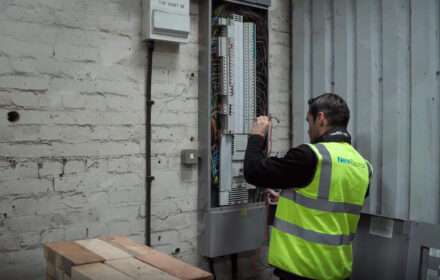
Distribution boards should be accessible, secure, clearly labelled and free from visible signs of damage or overheating.
Check for:
- Clear and up-to-date circuit labels
- Safe access around distribution boards
- No stored items blocking access
- No visible damage to covers or components
- No signs of overheating, scorch marks or discolouration
- No repeated circuit tripping
- No evidence of unauthorised alterations
- Recent changes or works being recorded
If distribution boards are poorly labelled, repeatedly tripping or showing signs of damage, they should be reviewed by a qualified electrical contractor.
Lighting systems
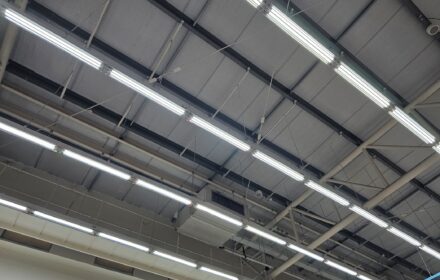
Lighting should be reliable, suitable for the work being carried out and appropriate for the layout of the building.
Check for:
- Failed lamps or fittings
- Flickering lights
- Dark spots or poor visibility
- Damaged fittings or covers
- Glare in working areas
- External lighting issues around entrances, yards, car parks or loading areas
- Lighting that no longer suits how the space is used
This is particularly important in warehouses, workshops, offices, corridors, stairways, car parks and areas used outside normal daylight hours.
Emergency lighting
Emergency lighting should be reviewed as part of the wider maintenance process, especially where it supports escape routes, stairways, corridors, exits or higher-risk work areas.
Check whether:
- Emergency lights are present where required
- Test records are available
- Fittings appear damaged or missing
- Escape routes have changed
- Layout changes may have affected coverage
- Previous defects have been completed
- Contractor records are available
Emergency lighting should remain suitable for the current layout and use of the building, not just the original installation.
Sockets, switches and accessories
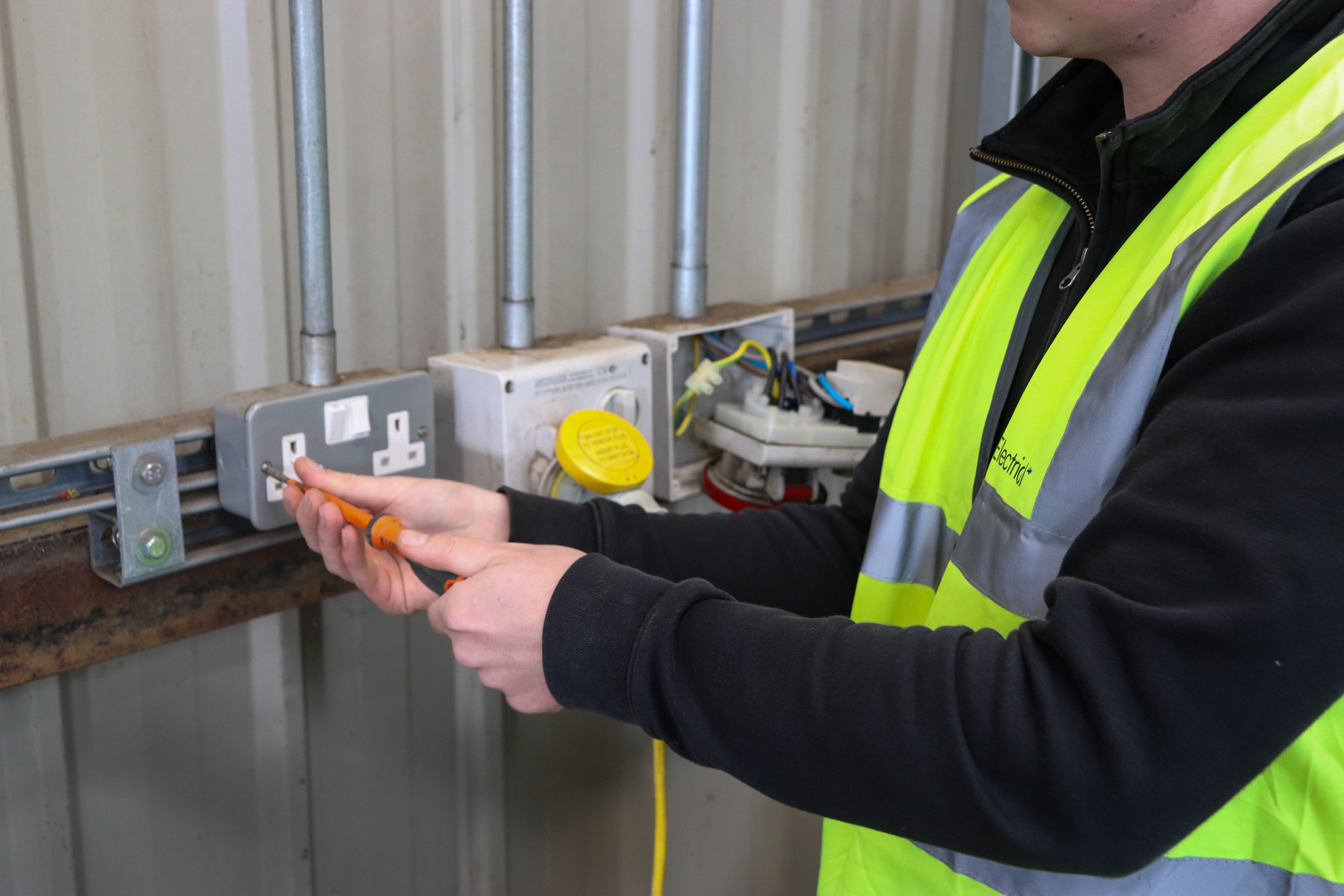
Sockets, switches, isolators and accessories should be checked visually for signs of damage, wear or overheating.
Look for:
- Cracked or loose sockets
- Damaged switches
- Scorch marks or discolouration
- Warm accessories
- Buzzing sounds
- Exposed wiring
- Damaged faceplates
- Overloaded extension leads or adaptors
High-use areas often need closer attention, especially offices, kitchens, classrooms, workshops, warehouses and production spaces.
Visible cabling and containment
Visible cabling, trunking, conduit and containment should be protected, secure and free from obvious damage.
Check for:
- Loose or damaged trunking
- Exposed conductors
- Damaged conduit or containment
- Cables exposed to impact, moisture or heat
- Temporary wiring that appears to have become permanent
- Poor cable management around workstations or equipment
- Cables trailing across walkways or operational areas
Any damaged or exposed cabling should be reviewed by a competent person.
Is a maintenance checklist the same as an EICR?
No. A maintenance checklist and an Electrical Installation Condition Report, or EICR, are different.
A checklist helps with routine visual review, record-keeping, and issue tracking. An EICR is a formal inspection and test of the electrical installation, used to assess its condition and identify whether it remains safe for continued use.
A checklist can support day-to-day electrical management, but it should not be treated as a replacement for formal inspection, testing or certification.
How often should commercial electrical systems be checked?
There is no single maintenance frequency that applies to every commercial property. The right schedule depends on the building, equipment, environment, usage levels and previous maintenance history.
A busy warehouse, school, workshop or industrial unit may need a different approach from a small office or low-use commercial space.
A qualified electrical contractor can review the premises and recommend a maintenance schedule based on the actual risk, use and condition of the installation.
When to speak to a commercial electrical contractor
You should speak to a contractor if your site has frequent faults, outdated systems, poor records, repeated tripping, damaged accessories, lighting issues or no clear maintenance schedule.
Nene Electrical can review your premises, identify priority actions and help create a practical electrical maintenance plan for your building.
Contact Nene Electrical
Need help reviewing your electrical systems? Speak to Nene Electrical to arrange a practical site assessment. We can identify priority issues, advise on remedial work and help you put a suitable maintenance schedule in place.
Download the checklist or enquire about electrical maintenance support.