Emergency Lighting Requirements for Commercial Premises
If the normal lighting failed on a dark winter afternoon, would everyone in the building have a clear, lit route to the nearest exit?
That is the practical question behind emergency lighting requirements. It is not just about having fittings in place. It is about whether people can move safely through the building if the main lighting fails.
For commercial premises, emergency lighting sits across fire safety, workplace safety and electrical compliance. That is why it can sometimes be overlooked. It may not sit neatly with one person or one maintenance task, but it still needs to remain suitable for how the building is used.
What counts as emergency lighting?
Emergency lighting is lighting that operates when the normal lighting supply fails. Its purpose is to help people find escape routes, identify exits, avoid hazards and leave the building safely.
It is different from general backup power. A generator that keeps equipment running is not the same as emergency lighting that supports safe movement through the premises.
In commercial buildings, emergency lighting should be considered alongside fire risk assessments, escape routes, signage, building layout and wider electrical maintenance.
Where emergency lighting may be required
Emergency lighting requirements depend on the building, how it is used and the level of risk if normal lighting fails.
In practical terms, emergency lighting is commonly considered for escape routes, stairways, corridors, final exits, windowless spaces, plant rooms, high-risk work areas and routes used outside daylight hours.
That does not mean every room automatically needs emergency lighting. A small single-storey unit with simple routes may need a different approach from a multi-floor office, warehouse, school, retail unit or industrial site used into the evening.
The key question is whether a lighting failure would put people at risk or make it harder for them to leave the building safely.
Where emergency lighting requirements can fall out of date
In many commercial premises, the issue is not that emergency lighting was never installed. It is that the building has changed since the system was last reviewed.
A layout may have been suitable when the system was first installed, but that can change over time. New partitions, racking, machinery, signage, tenants or working patterns can all affect escape routes and visibility.
Common issues include missing test records, damaged fittings, failed batteries, emergency lights blocked by stock or shelving, and previous defects that have not been followed up.
If the building has been refurbished, expanded or changed use, it is worth checking whether the emergency lighting still matches the current layout.
Testing, maintenance and records
Emergency lighting needs to work when it is needed, so testing and maintenance should form part of the wider building maintenance process.
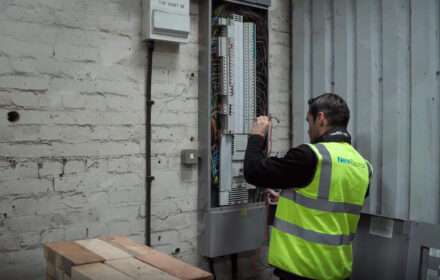
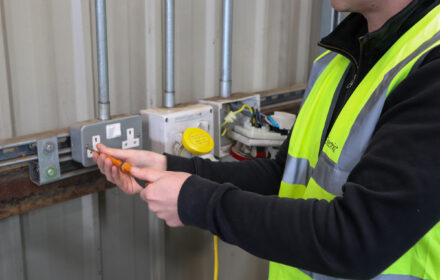
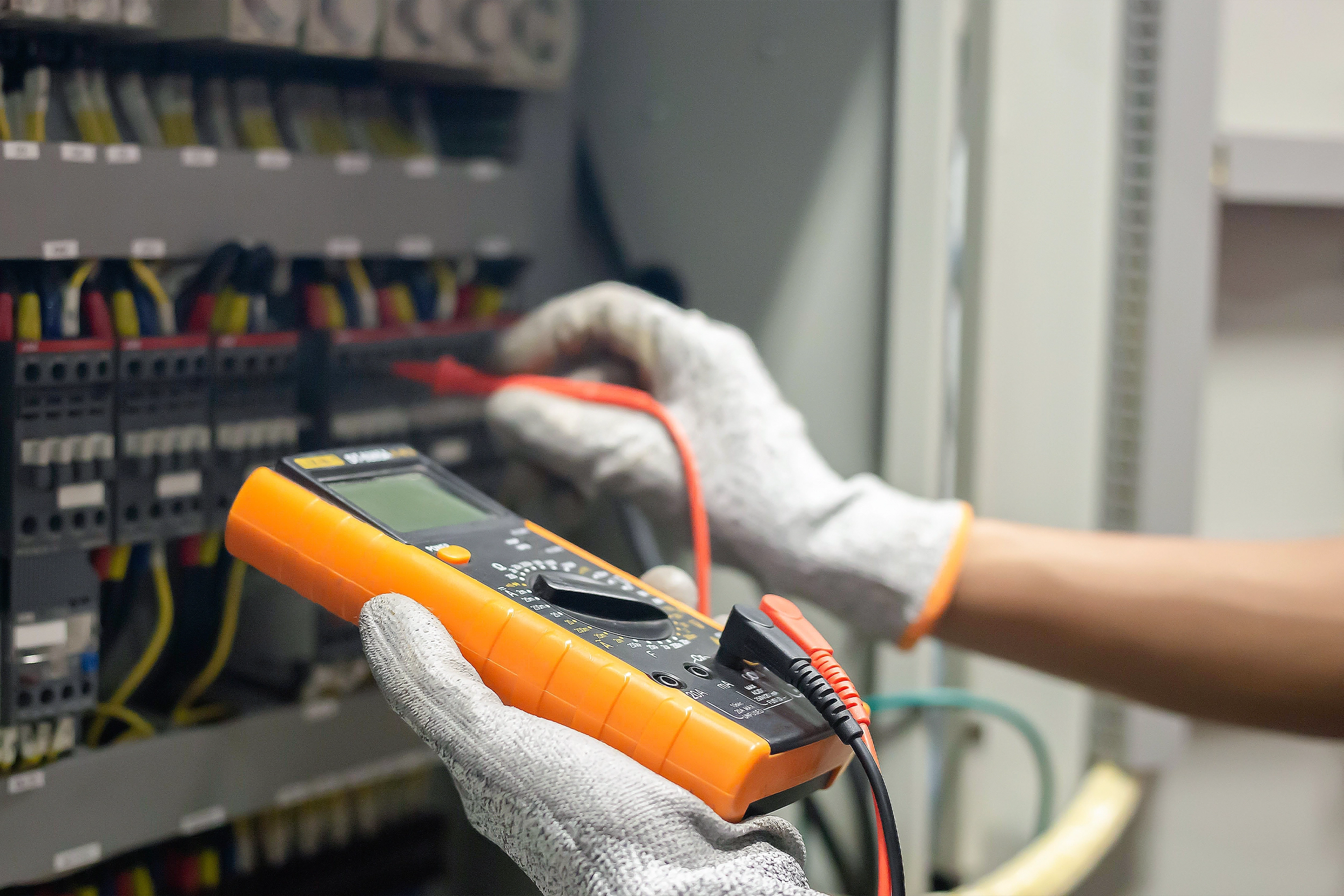
This may include routine checks, inspection of fittings, review of test records, battery duration testing where required, replacement of faulty fittings and recording of remedial actions.
The records matter as much as the checks themselves. If there is an audit, insurance query or safety incident, clear records help show what has been tested, what issues were found and what action was taken.
If records are missing or inconsistent, it can be difficult for facilities teams, landlords or responsible persons to demonstrate that emergency lighting is being properly managed.
Emergency lighting and commercial lighting upgrades
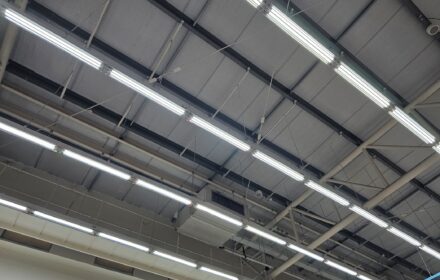
If you are planning a commercial lighting installation or LED upgrade, it is sensible to review emergency lighting at the same time.
Lighting projects often involve access equipment, changes to fittings, work around corridors or exits, and disruption to parts of the building. Reviewing emergency lighting during the same project can be more practical than treating it as a separate job later.
It also helps ensure the finished lighting installation reflects the current layout of the premises, rather than an outdated version of it.
When to arrange an emergency lighting review
You should consider arranging a review if you are unsure whether your emergency lighting is suitable, if test records are missing, or if the building layout has changed.
A review may also be useful if fittings are damaged, escape routes have been altered, previous defects have not been completed, or a fire risk assessment has raised concerns.
For landlords, property managers and facilities teams, an emergency lighting review can help clarify what is working, what needs attention and whether the current setup is still appropriate for the premises.
FAQs
Do all commercial buildings need emergency lighting?
Many commercial premises require emergency lighting in some form, especially where people would be at risk if normal lighting failed. The extent depends on the layout, occupancy, escape routes and how the building is used.
Does every room need emergency lighting?
No. Emergency lighting requirements depend on the layout, use and risk level of the building. It is usually focused on areas where lighting failure could create danger or affect safe escape.
How often should emergency lighting be tested?
Emergency lighting should be tested regularly, with records kept for checks, defects and remedial work. The right testing schedule should be confirmed based on the system, premises and relevant fire safety arrangements.
Should emergency lighting be checked during a lighting upgrade?
Yes. A lighting upgrade is a good opportunity to check whether emergency lighting remains suitable for the current layout, escape routes and use of the premises.
Arrange an emergency lighting review
If you are not sure whether your emergency lighting still matches the way your building is used, Nene Electrical can help.
We can review the system against your current layout, identify obvious gaps or defects, and advise what needs attention.
📞 01327 300 456
📧 hello@nene-electrical.co.uk